On June 21, Colombia joined the group of countries that, over the past two years, have shifted to the right in Latin America. Outsider candidate Abelardo de la Espriella became president of the republic and assumed office for the next four years. Beyond analyzing the controversial campaign of the left and Iván Cepeda, or studying the impact of social media and simplistic rhetoric in the new era, our intention is to focus on the government that has just left office and understand what led to the failure of the first left-wing bid in Colombia’s contemporary history.
A lost “Aureliano” in his palace
Colonel Aureliano Buendía is one of the iconic characters created by Colombia’s only Nobel Prize-winning author, Gabriel García Márquez. He is the revolutionary son of José Arcadio Buendía and Úrsula Iguarán, who went off to fight against conservative governments and about whom his mother reflected: “She glimpsed that he had not waged so many wars out of idealism as everyone believed, nor had he given up on imminent victory out of weariness, as everyone believed, but rather that he had won and lost for the same reason, out of pure and sinful pride.” In two words: incapable of love and arrogant.

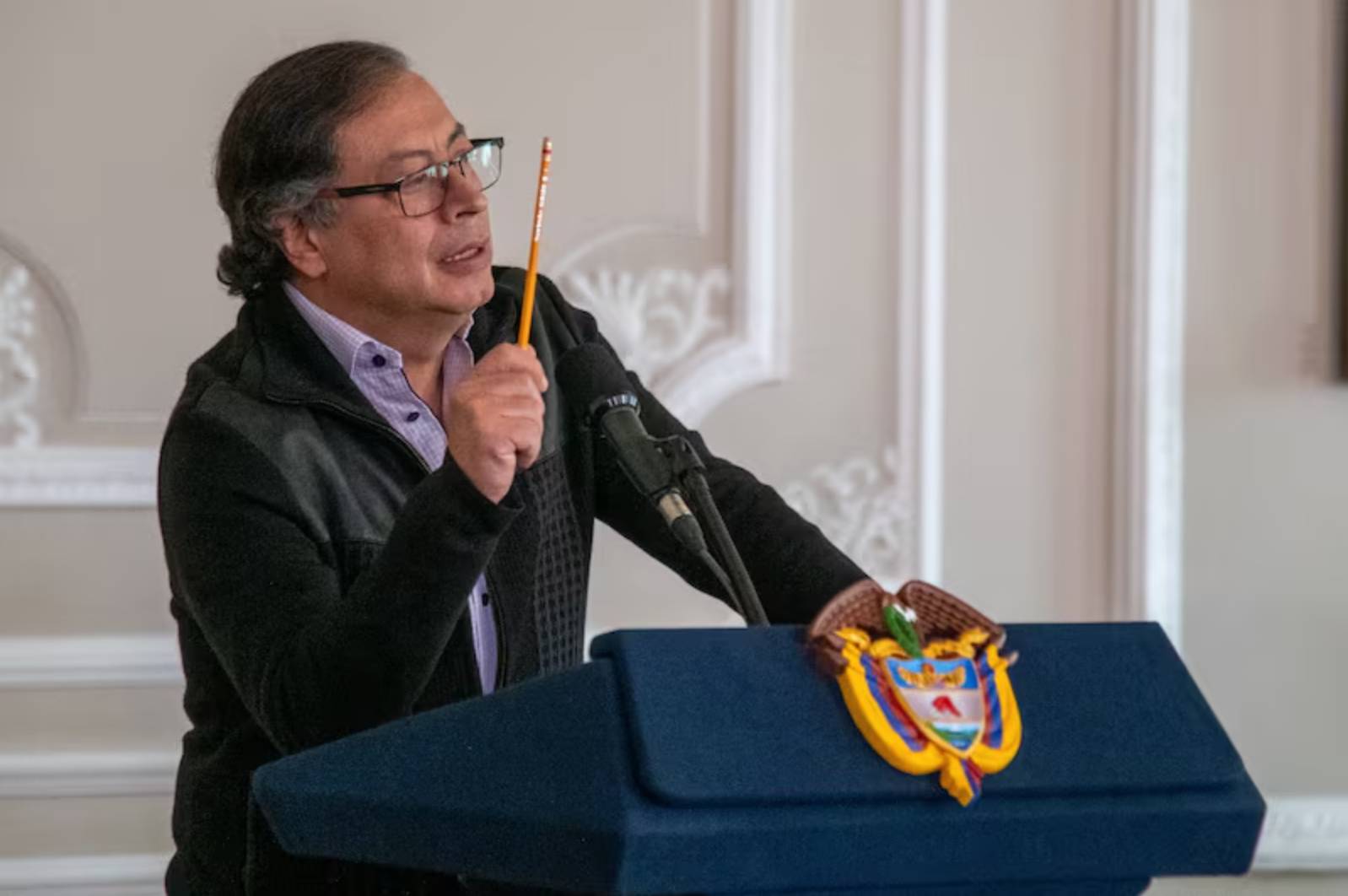
It is paradoxical to draw a profile of the fictional character who became a mirror for the outgoing Colombian president. Gustavo Petro turned Colonel Buendía into a kind of constant icon and personal reference point, partly because it is known that it was the alias the current president used during his time in the M-19 guerrilla movement. It is also striking that, just as the Macondian military man ended his days making and remaking little gold fish in the solitude of his workshop, the outgoing president ended up in a similar fashion: shut away in his solitude, posting hilarious conspiracy theories and allegations of fraud in the early hours of the morning, with few people backing him. In the words of a well-known journalist: incapable and arrogant.
Gustavo Petro Urrego, an experienced politician who had gone from clandestinity to political life, serving as a city councilman, representative in the House, senator, and mayor of Bogotá, reached the presidency of Colombia in June 2022, facing the late former mayor of Bucaramanga, Rodolfo Hernández. It was a truly historic event: Petro was the first president with an openly disruptive project since 1934, when Alfonso López Pumarejo first came to power. He led the strongest left-wing proposal in a country historically governed by elites from a handful of families, most of them based in Bogotá.
As soon as he took office, he installed a cabinet that included experienced centrist technocrats, respected activists from the left, and new figures in their respective fields who seemed to herald a good government. However, harmony did not last long: barely a couple of months later, the governing coalition broke apart over ideological divisions concerning the substance of the social reforms being promoted by the government. What followed was an endless succession of ministers, unprecedented in the country’s recent political history. Many of them were dismissed abruptly and on bad terms, which meant that in the following weeks, the morning radio talk shows would recount the internal ruptures within the government with particular fascination.
Were the traditional media engaged in an open campaign against the government? Yes. At least for the most part. We must acknowledge it. However, they did not have to try very hard. Periodically, the government itself provided arguments and material. There were corruption scandals and conflicts of interest involving the president’s son and brother. This was compounded by a series of institutional decisions concerning the nationwide broadcast of cabinet meetings: endless councils that had nothing to envy the most popular TV series and featured officials struggling to stay awake, accusations, and grand soliloquies about everything under the sun, but that only rarely addressed eminently technical issues.
Now, there are other issues worth examining. Petro succumbed to the same spell that has possessed Colombia’s republican history: the legislative fetish. While other left-wing leaders in Latin America began their terms in office with investments in infrastructure, major efforts in direct state social action, or by focusing on external debt repayment, from the very first minute the Petro government became obsessed with three major legislative reforms: healthcare, pensions, and labor. Of these, it was only able to get the labor reform through.
The endless parade of ministers was accompanied by a deep rupture between Petro and Vice President Francia Márquez. The great project of the Afro-Colombian leader, the Ministry of Equality, failed spectacularly due to a series of administrative shortcomings that led to its closure, resulting in an operational crisis and no genuinely lasting policy.
Meanwhile, in a deeply violent country full of myths that shape its collective identity—for example, the belief that Colombians speak the best Spanish in the world—the president decided to turn his discourse into a kind of magical incantation to accompany his solitude. Long monologues that went nowhere, and an X profile that became the lamentation wall of a man who governed little but spoke and wrote a great deal, gradually created an alternative reality in which the president was loved and respected by an immense majority that trusted in the future of his national project.
Meanwhile, deep dissatisfaction accumulated around promises that never materialized: the policy of negotiating peace with armed groups proved to be a failure, the transcontinental bioceanic railway never made it beyond an X post, and the president’s personal scandals and institutional clashes laid the groundwork for the arrival of a new right-wing government.
The successor as scapegoat
The opposition won almost half of the valid votes. However, it is clear that the left has become firmly established in Colombia and is far from returning to being a marginal force, as it was during the era of the two-party system. Even so, placing the entire blame for the defeat on candidate Iván Cepeda overlooks the fact that a democratic election also represents a referendum on the success of the outgoing government. Petrismo did not lose by 250,000 votes. A broader view means understanding the blank vote, made up of many voters from third-party movements who did not feel called upon to join an exceptional alliance after nearly a four-year term marked by divisions and rhetoric of fragmentation. And, of course, it also means analyzing the high level of abstention—which, although it has declined, remains high in a country that prides itself on being Latin America’s oldest democracy. The eternal soliloquy was unable to win over a population with low political engagement and concerns about security and the economy.
There is probably much to be said about Cepeda’s campaign mistakes. However, it would be more worthwhile to look south and identify parallels. If Javier Milei remains strong in Argentina despite the economic crisis, it is precisely because of the left’s inability to engage in self-criticism: as long as much of the opposition continues to believe in the Kirchnerist spell, allege persecution, and stone any emerging figure, they will have to get used to being just that: the opposition.
If the Colombian left intends to elevate Petro as the great reference point for its ideas while ignoring his misogyny, the absence of public policies for diverse communities, and his inability to condemn left-wing totalitarian regimes, perhaps it would be best for it to get used to a sad fate: remaining locked away in a workshop, forging little gold fish only to melt them down again and start all over.
Autor

Lawyer, journalist and university professor. Professor assigned to the Political Science and Government program at the Los Libertadores University Foundation. Master in Journalism from the University of Barcelona / Columbia University.