Twenty years ago, when I was serving at the U.S. Embassy in Nicaragua, we began using a foreign policy tool with particular intensity that, at first glance, might have seemed relatively minor: visa revocations. Among ourselves, we even coined a verb for it, “to unvisa,” and before long, we were talking about the “unvisa”—those whose visas had been revoked. There was a touch of humor in the expression, but little about the measure itself was trivial. In certain political and economic circles, losing access to the United States could have personal, family, and reputational consequences far greater than a simple consular decision might suggest.
Visa restrictions can be a considerably more effective instrument than is generally acknowledged. They do not replace a criminal investigation, nor do they in themselves constitute proof that a crime has been committed. But when they are backed by credible information and applied consistently, they can impose tangible costs on individuals who, within their own countries, often feel protected by political, economic, or institutional power.

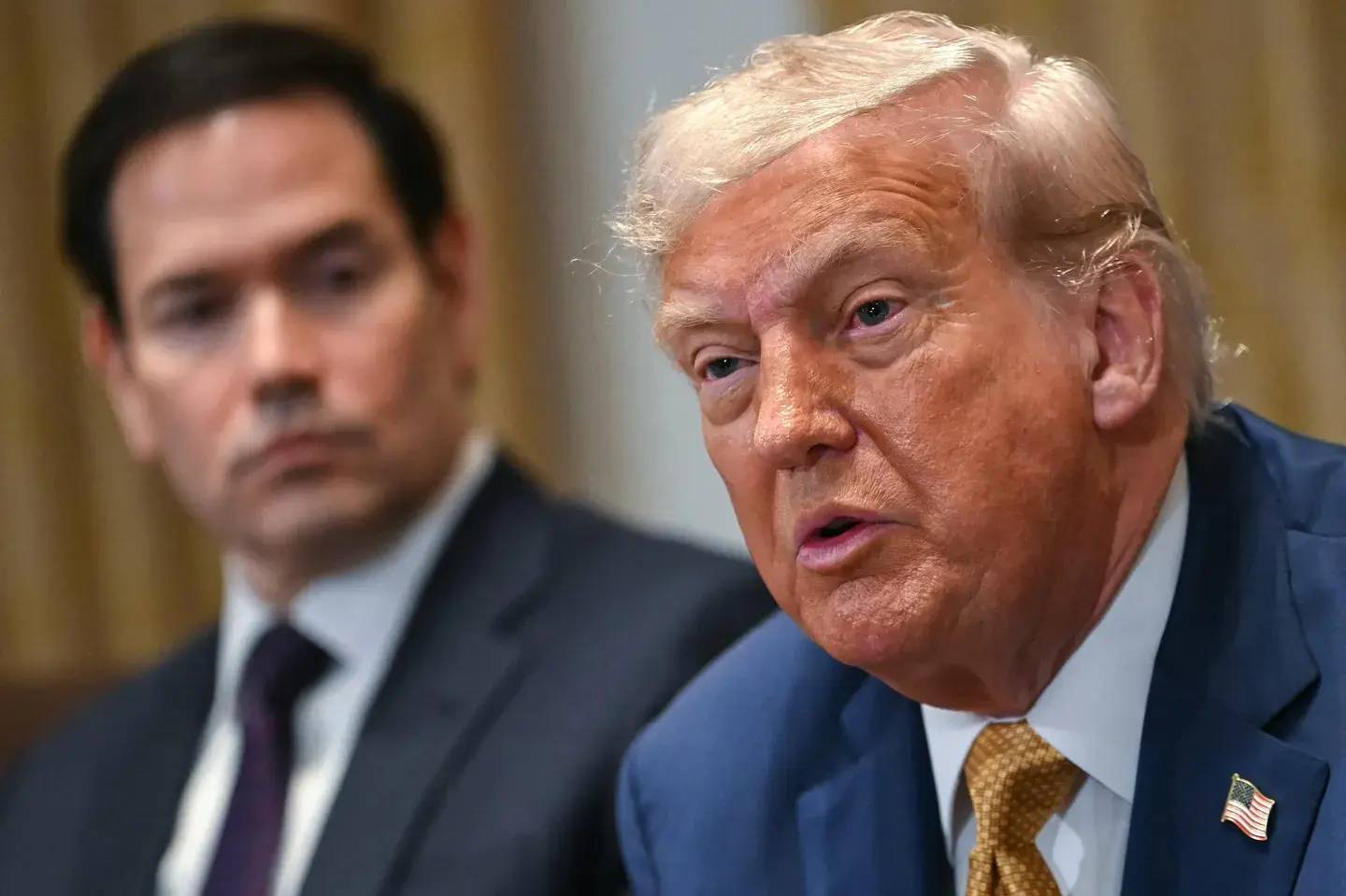
That debate has now returned to the center of hemispheric politics. The Trump administration has announced new visa restrictions against citizens of Bolivia, Colombia, Ecuador, and Peru, justifying them on the grounds of cases involving corruption, drug trafficking, or conduct that, according to Washington, affects governments and democratic institutions. It is worth pausing precisely over that phrase, “according to Washington.” A tool can be effective without its use necessarily being impartial, and no government should automatically be presumed to have motives that always match its stated reasons.
The question, therefore, cannot be limited to whether the restrictions work. We must also ask who imposes them, against whom, on what evidence, and according to which criteria. This is particularly important under an administration that has made the use of immigration and visa powers a highly visible part of its policy, in contexts that extend well beyond the fight against corruption. In various cases, these decisions have been the subject of political controversy and legal challenges. Evaluating the new policy therefore requires more than simply accepting the official explanation accompanying it.
The Bolivian case has received particular attention because of the number of people affected and the designation of Attorney General Roger Mariaca, whom Washington accuses of corruption. Mariaca has rejected the allegations, and Bolivian authorities have requested the information underlying the U.S. decision. I believe that response is appropriate precisely because it avoids two extremes: accepting Washington’s word as a verdict or dismissing it simply because it comes from Washington.
A visa restriction imposed by the United States cannot, by itself, become a declaration of guilt. National authorities must examine the facts in accordance with their own constitutions. But it also makes little sense to react as though a serious allegation made by another government could automatically be dismissed simply because it comes from abroad.
The measure’s usefulness, however, is not limited to its potential legal effects. Its real force is usually political and reputational. In Nicaragua, we saw officials who, after losing their visas, publicly declared that they did not care. Sometimes that may have been true. At other times, their reactions suggested otherwise. For some segments of Latin American elites, access to the United States can involve family relationships, education, business interests, professional networks, and a certain social standing. Losing that access also sends a signal to others who have not yet been sanctioned.
For years, I argued that, in certain cases, the policy could be more effective if it also extended to immediate family members. The point was not to attribute guilt to them for another person’s actions. The reasoning was more practical. An official could personally bear the cost of losing a visa, portray himself as a victim of Washington, and even turn the sanction into a political banner. The equation could be different when his family continued to depend on access to the United States to travel, study, or maintain personal ties, and I believe this increases the measure’s ability to exert pressure.
The use of this tool therefore requires caution. The greater the personal and reputational impact, the stronger the evidence supporting it must be. However, not all governments that use it should be granted the same degree of trust. If people in comparable circumstances are treated differently depending on whether they are allies or adversaries of Washington, the policy will lose credibility, even when some of those sanctioned have engaged in conduct that warrants scrutiny.
This issue deserves particular attention under the current administration. It would be unwise to analyze the new restrictions as though they came from an abstract institution called “the United States,” detached from the political priorities of those currently in power. The fact that a measure is legally permissible and strategically effective does not, in itself, resolve the question of what it is being used for.
It is also worth keeping the distinctions between the various tools of U.S. foreign policy clear. Denying or revoking a visa is an immigration decision. It is not equivalent to freezing assets, imposing financial sanctions, launching a criminal investigation, or requesting extradition. In some cases, the same person may ultimately be subject to several of these measures, but each has distinct legal grounds and procedures. A visa restriction may be the first visible sign that Washington possesses troubling information, but it does not, by itself, allow us to conclude what other actions may follow.
What can happen, and what we are already seeing in Bolivia, is that a measure taken in Washington produces political consequences within the country affected. It can prompt calls for investigations, legislative debates, and questions about the conduct of certain officials. That domestic effect may ultimately prove more significant than being unable to board a plane bound for the United States.
From the U.S. perspective, the practical advantages are obvious. Visa restrictions cost little, can be implemented quickly, and do not require the United States to attempt to exercise criminal jurisdiction over every act of corruption committed abroad. Washington is using something it controls as a sovereign state: access to its territory.
That explains why the tool is attractive, but it does not answer the question of how it should be used. The United States has limited capacity to reform other countries’ institutions and even less capacity to replace them. It can decide whom to allow into its territory, but that power does not automatically turn its judgment of an individual into a truth that other countries must accept without scrutiny.
Bolivia is currently the case receiving the most attention, but the specific case should not be confused with the broader policy. Citizens of several countries have already been affected, and everything suggests that Washington intends to continue using this mechanism across the hemisphere. Each case will have to be assessed on its own merits, while we also observe whether the criteria are applied consistently to both adversaries and allies.
That last question may ultimately prove decisive. A policy intended to combat corruption or protect democratic institutions loses its force if those administering it appear to select their targets according to political convenience. The power to “unvisa” depends not only on the legal authority of the United States to control its borders, but also on the credibility with which it exercises that authority.
Two decades ago, in Nicaragua, we learned that a visa could be much more than a travel document. It could become a fairly effective instrument of political pressure. But that experience also offers a reason to examine the new policy carefully.
The “unvisaed” are back. What happens now will depend not only on whom Washington decides to bar from entry but also on the quality of the evidence, the consistency with which it applies its own criteria, and the ability of Latin American institutions to investigate for themselves the allegations that these decisions bring to the fore.
Autor

A lawyer and former high-ranking U.S. government official with decades of experience in Latin America. He was a senior advisor for South America at the United States Agency for International Development (USAID).