Among Latin American presidents, public disapproval prevails. Left or right, newcomers or veterans, women or men: the constant is an electorate that is angry, dissatisfied, and disappointed. There are, of course, exceptions that break the mold: Mexico’s Claudia Sheinbaum and El Salvador’s Nayib Bukele enjoy positive approval ratings hovering around 70%. Overall, however, the picture is discouraging. Of the 18 presidents in the region surveyed by the Argentine polling firm CB, nearly 60% have negative ratings that exceed their positive ones. For half of these 18 leaders, the “very poor” negative rating surpasses 30%. In other words, there is not only rejection, but in a more than significant share of cases, extreme rejection.
A common question is why presidents lose their positive image so quickly, why they reach such high levels of disapproval shortly after winning elections, and, above all, why this was not the case in the past. The original question that helps explain part of this trend is why a president won in the first place: was it because voters loved them, or because they hated their opponent even more? In many cases, a possible answer is that what drove voters to the polls was not love, hope, or happiness, but anger, hatred, and fear.

These days, Bolivia is facing a scenario of extreme instability. President Paz secured only 32% of the vote in the general election. Just seven months into office, political tensions and a public opinion showing nearly 30% “very poor” ratings and 44% overall negative approval expose the fragility of his administration. Kast’s rise in Chile, where he captured only 23.9% of the vote in the general election, is better understood as a protest vote against Boric’s government, which many found disappointing. Peru’s case requires little explanation: in April, Keiko Fujimori received only 17% of the vote, followed by four candidates who each hovered around 10%, reflecting a fragmented country that has had eight presidents in the past ten years. In some cases, presidents weaken after taking office, but in many others, they begin from a position of weakness.
What emerges overall is that it has become increasingly unlikely for a candidate to comfortably surpass 40% of the vote in general elections. It can still happen, depending on the country and specific circumstances, but such scenarios increasingly belong to another era. Looking at 137 presidential elections across 15 Latin American countries, the pattern is clear: in 1980, the leading candidate won an average of 49% of the vote; in both the 1990s and the 2000s, that average fell to 43%; in the 2010s, it dropped to 40%; and in the 2020s, it has declined further to 38%.
The recent Colombian electoral process introduces an interesting nuance to this analysis, while further illustrating the dynamics observed elsewhere in the region. Of the last nine presidential elections, only two saw the leading candidate receive less than 40% of the vote. In all the others—including the election on Sunday, May 31, in which the frontrunner obtained 43.7%—the results exceeded that threshold. Combined with the 40% won by Cepeda, this reflects the continuing process of growing electoral polarization that Colombia has experienced since 2014.
Despite this exception, the broader regional trend remains clear: today, the average winning presidential candidate in Latin America receives 10 percentage points fewer than winners did in the 1980s. Majorities have grown thinner, weaker, and more fragmented. What once united them, strengthened them, and sustained them appears to have diminished.
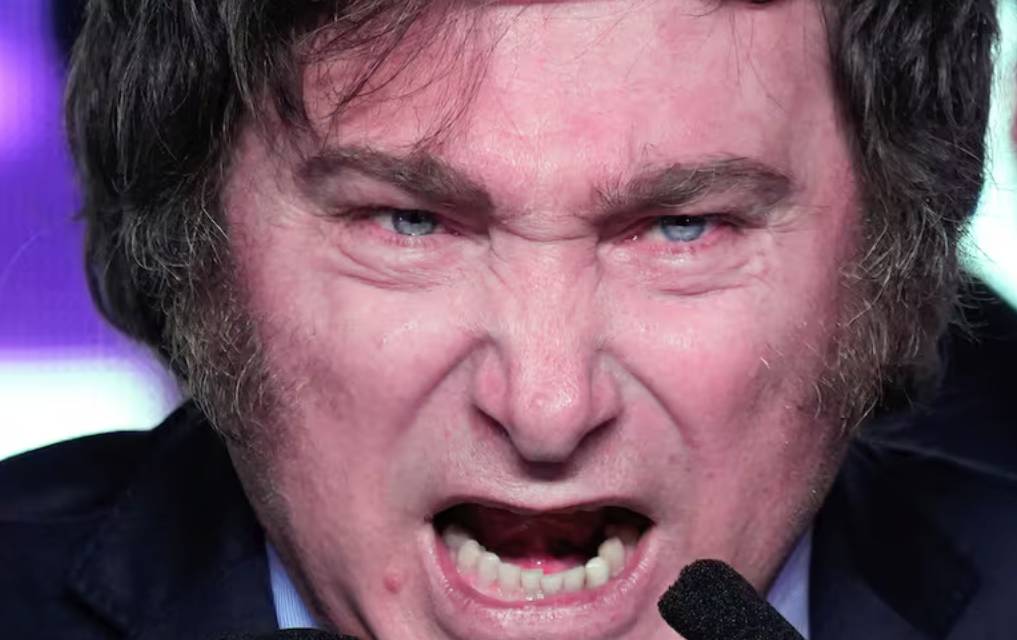
It is becoming increasingly difficult to mobilize voters through happiness or hope. We live in frustrated societies, burdened by inherited hardships and uncertain futures. Satisfaction is scarce, as is the prospect of a better life. The key to many contemporary political strategies lies in energizing electoral behavior solely by directing rejection toward an antagonist.
According to the theory of Affective Intelligence, developed by Marcus, Neuman, and MacKuen in their landmark 2000 book Affective Intelligence and Political Judgment, certain emotions generate heightened psychological energy and alertness that help mobilize voters. Research by political scientist Valentino has identified anger and hatred as the most effective emotions for this purpose. Assigning blame, perceiving that a person or group is responsible for one’s suffering, and believing that voting for X is a way to punish Y have become some of today’s most powerful electoral drivers.
These dynamics do not by themselves explain electoral outcomes, but in contexts of party fragmentation, economic distress, and crises of representation, they become particularly effective tools for mobilizing voters. The discontent people experience is translated—and often amplified—by politics into anger directed at a candidate or group. And when that anger outlives the electoral context, it turns into hatred.
At a time when broad majorities are weakening, intense minorities have become the key to electoral success. Yet that intensity only produces political magic when it is channeled toward an antagonist. Where there were isolated individuals, few shared bonds, and erratic direction, order, purpose, and strength suddenly emerge.
Latin America is not an isolated case. Across much of the Western world, what prevails is no longer affection for one’s own side, political representation, or identification with a party or candidate. Instead, rejection has taken center stage, and many voters are primarily concerned with choosing whoever can best harm the person they dislike the most. As political scientist Giuliano da Empoli has put it, the formula of our time is anger plus algorithm.
Fueling electoral campaigns with emotions such as anger, fear, and hatred appears to have become one of the most effective electoral antidotes for fragmented, exhausted, and politically disillusioned societies. While this strategy may produce electoral gains, the cost is reflected in weak presidents and fleeting public support.
Conflict is inherent to politics; when expressed through passions, it can be a powerful instrument for winning elections, but it is insufficient—and dangerous—as a basis for governing.
Autor

Professor at the University of Buenos Aires (UBA) and the University of Belgrano, Argentina, where he also conducts research on political and electoral behavior, political communication, and political psychology. He holds a Master's degree from FLACSO and is a political scientist and sociologist from the UBA.